Summer Show Livestock Care
Livestock shows are the highlight of summer for many youth exhibitors. They provide the opportunity to showcase months of hard work, travel to new destinations, see old friends, make new friends, and receive recognition for their efforts. However, along with the excitement of summer shows comes summer temperatures, travel stress, new environments, changing routines, and busy schedules that create challenges for both the animals and exhibitors.
Whether you’re showing cattle, sheep, goats, swine, or other species, a proactive approach to summer show livestock care can help animals stay comfortable, maintain performance, and look their best while on the road and at the show.
Why Summer Show Livestock Care Matters
Livestock at summer shows encounter several stressors simultaneously. Hauling, changes in environment and feeding schedules, crowds of people, heat, humidity, and insect pressure can all impact animal well-being. That’s why we created this guide on summer show livestock care. We know that regardless of whether you are at home, on the road, or at a show, your animals are your priority. However, when you’re at a show, the stress intensifies, weakening the hours and weeks of effort from home.
Even mild stress can lead to:
- Reduced feed intake
- Lower water consumption (dehydration)_
- Increased fatigue
- Digestive disruptions
- Changes in appearance and condition
- Reduced performance in the show ring
Take a proactive approach and maintain consistent care practices. Therefore, you can help your animals handle these challenges and stay on track throughout show season.
Prioritize Hydration
Water is one of the most important components of any summer show livestock care program.
Livestock and humans can quickly become dehydrated when temperatures rise, especially when they are traveling or spending extended periods in show barns. Reduced water intake often leads to decreased feed consumption, which can impact body condition and overall performance.
To encourage livestock hydration:
- Provide clean, fresh water at all times.
- Clean water buckets and tanks regularly.
- Offer water immediately after arrival at your destination.
- Consider bringing water from home if animals are sensitive to changes in taste.
- Monitor water intake daily.
- If traveling for an extended time, stop along your route and offer animals water.
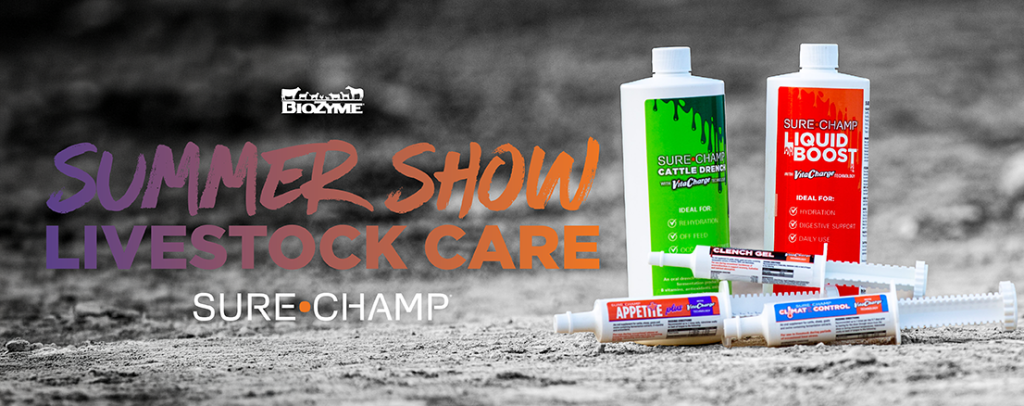
One way to encourage drinking is to offer your animals water with Sure Champ® Liquid Boost®. Liquid Boost is a liquid for all livestock designed to provide immediate support to the animal’s digestive and immune system. It contains AO-Biotics® Amaferm®, a prebiotic research-proven to enhance digestibility and MOS, which helps normalize gut microflora and support the immune system. Liquid Boost works for all livestock species and contains flavoring to help increase feed or water intake. The flavoring helps mask any chlorine found in water that animals might not be accustomed to.
Exhibitors should also watch for signs of dehydration, including lethargy, reduced appetite, or dry mucous membranes.
Maintain a Consistent Feeding Program
One of the biggest oversights exhibitors make in their summer show livestock care is allowing feeding schedules to become inconsistent.
Animals perform best when their digestive systems receive nutrients on a predictable schedule. Sudden feed changes, skipped meals, or inconsistent feeding times can create unnecessary stress.
At BioZyme® Inc., makers of the Sure Champ brand, we recommend feeding your show livestock the same times each day, typically 12 hours apart. This includes even while at the show, to give your animals some consistency.
Always haul your own feed from home to the show. This includes hay and any supplements your livestock are on. This ensures your livestock stay on their feed regimen and should reduce the odds of them going off feed and water. However, if you do run low on any Sure Champ supplement like Climate Control Gel, Clench Gel or Liquid Boost, be sure to visit the Sullivan’s or Weaver trailers.
Another consideration is to avoid changing your ration or adding new products just before a show or at a show. We don’t recommend changing their entire diet two days before leaving for a show or while at a show, which is why we suggest bringing plenty of feed and hay from home when going to a show. Animals thrive on consistency, and when their diet changes, that adds unnecessary stress.
Consistency helps animals maintain appetite, body condition, and performance throughout the show season.
Support Digestive Health During Stressful Events
Travel and environmental changes can place additional demands on the digestive system. That’s how Sure Champ becomes an important resource for your summer show livestock care, at home, on the road, and at the show.
A healthy digestive tract plays a critical role in nutrient utilization, feed efficiency, immune function, and overall performance. During stressful periods, nutritional solutions that support digestive health may help livestock continue making effective use of the nutrients they consume.
For all species, supporting rumen or gut function before, during, and after a show can help animals maintain consistency when conditions are less than ideal. Remember, Sure Champ is powered by Amaferm, a research-proven prebiotic that enhances digestibility.
Summer Show Livestock Care in the Heat
Excessive temperatures can quickly create challenges for show animals, especially when ventilation is limited or humidity levels are high.
Signs of Heat Stress
Heat stress in show livestock can manifest through various signs and symptoms. Exhibitors and caretakers must be vigilant and recognize these signs promptly to intervene and mitigate the effects of heat stress as part of their summer show livestock care. Some common signs of heat stress include:
Excessive Panting
Panting is a natural mechanism for livestock to dissipate heat and regulate their body temperature. However, excessive or rapid panting, especially when accompanied by drooling or open-mouth breathing, may indicate heat stress.
Excessive salivation or drooling can be a sign of discomfort and elevated body temperature. If you see extra drool, especially accompanied with panting, you should be alarmed.
Increased Respiratory and Heart Rates
Elevated respiratory rate is another indicator of heat stress in livestock. Rapid, shallow breathing may occur as the animal attempts to cool down by expelling heat through respiration. In addition, heat stress can cause an increase in heart rate as the animal’s cardiovascular system works harder to maintain normal body temperature. Palpating the heart rate or using a stethoscope can help assess cardiac function.
Decreased Feed Intake
Heat stress can suppress appetite and lead to decreased feed consumption in animals. Show livestock experiencing heat stress may show disinterest in feed or have reduced feed intake compared to normal.
Just like many humans don’t want to eat big meals when the temperature soars, neither do our animals. Watch for this easy sign of heat stress.
Decreased Activity and Lethargy
Heat-stressed livestock may become lethargic and show reduced activity levels. They may prefer lying down in shaded areas rather than standing or moving around.
Dehydration
Heat-stressed animals may exhibit signs of dehydration, including sunken eyes, dry muzzle and tacky or sticky gums. Monitoring hydration status and ensuring access to clean, fresh water is essential during periods of heat stress.
Being proactive is the best approach to helping animals deal with heat stress. Having a solid plan in place to combat heat stress could play a crucial role in maintaining your animal’s performance during periods of increased heat.
Keep your Animals Comfortable in the Heat
Heat stress management should be a key component of every summer show livestock care plan. One way to be proactive in heat stress mitigation is feeding Sure Champ® Extreme with ClariFly®. This pelleted, daily supplement for show livestock supports hoof health, hair coat, and performance when temperatures are above 70 degrees. It is designed for all species, combining the power of Amaferm with our patented HEAT® technology, a combination of essential oils and garlic, as well as ClariFly to support animals when heat and insects are a challenge. It also contains MOS, which helps normalize gut microflora and support the immune system.
Here are some other tips to prevent heat stress as part of your summer show livestock care plan:
- Utilize fans whenever permitted.
- Provide adequate airflow in stalls and pens.
- Schedule washing, exercise, and grooming during cooler parts of the day.
- Offer shade whenever possible.
- Avoid overcrowding animals in holding areas.
Manage Insect Pressure
Flies and other insects are more than just a nuisance. They can irritate livestock, disrupt feeding behavior, and increase stress levels – all things that set back your animal’s performance.
Effective insect control strategies include:
- Maintaining clean stalls and pens
- Removing manure regularly
- Using approved fly control products, like fly strips, fly sprays and Sure Champ Extreme with ClariFly
- Keeping feed areas clean
- Monitoring animals for signs of irritation
Reducing insect pressure helps livestock remain more comfortable and focused throughout the event.
Keep Biosecurity Top of Mind
Livestock shows bring together animals from numerous show barns and operations, making biosecurity especially important.
To help protect animal health:
- Avoid sharing equipment when possible.
- Disinfect grooming tools regularly.
- Clean water buckets and feeding equipment frequently.
- Limit nose-to-nose contact between animals.
- Monitor livestock daily for signs of illness.
- If possible, have one set of feed pans and water buckets for keeping on the trailer and one specifically for the barn.
Good biosecurity practices help reduce risk and protect both your animals and those around you.
Summer Show Livestock Care Happens Outside the Show Ring
Winning starts long before an animal enters the ring. The hours spent feeding, watering, monitoring, and caring for livestock behind the scenes often have the greatest impact on performance.
Successful summer show livestock care focuses on maintaining consistency, supporting digestive health, minimizing stress, and helping animals remain comfortable despite heat, travel, and changing environments. When exhibitors prioritize daily care, livestock are better prepared to look, feel, and perform their best throughout the show season.
We’ve mentioned several Sure Champ products to add to your show box to help you with summer show livestock care, specifically at the show, though all can also be used at howe and on the road.
Get Your Sure Champ Today
Summer livestock shows are exciting opportunities to showcase hard work and dedication. By focusing on hydration, nutrition, digestive health, heat management, insect control, and biosecurity, exhibitors can help their animals thrive during even the busiest parts of the season.
A thoughtful summer show livestock care plan not only supports animal well-being but also helps ensure livestock arrives in the ring ready to perform at their full potential.
Want to ensure Sure Champ is part of your #preptowin program? You can get your Sure Champ products as easily as ordering online today. Sure Champ products are now available on Amazon and Chewy.
Do you prefer to support a local Sure Champ dealer? Find a dealer near you to find all your favorite Sure Champ and other BioZyme products.
Want to stay current on all of our educational blogs and news? Sign up for our newsletter.